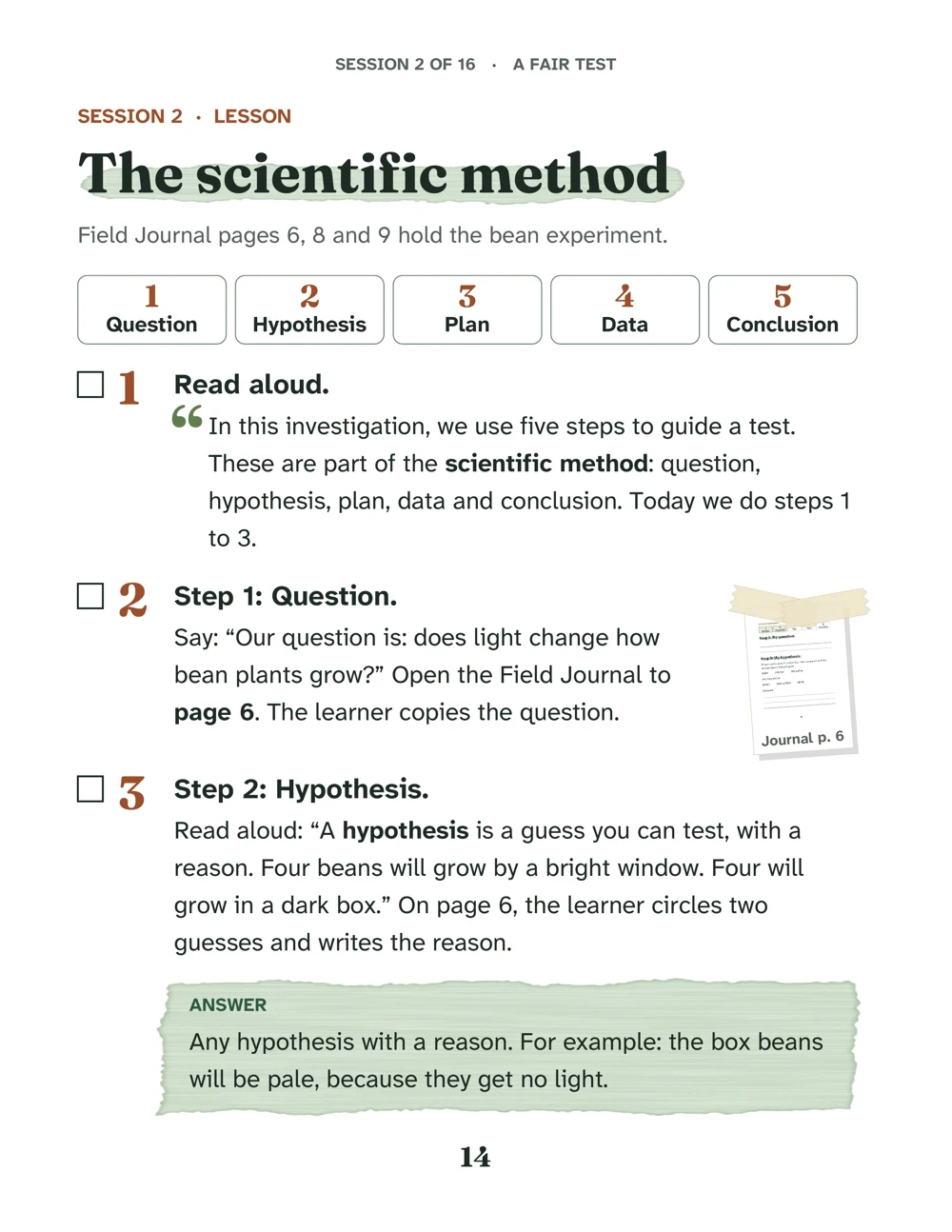
For the adult
The Guide
All 16 sessions, tray lists, reading references, questions and answers. The steps are written out so another adult can lead a session too.
113 pages • Read on screen or print
 Made DeliberateInstagram
A Made Deliberate science unit
For the kid who stops to look at every mushroom.
Follow that curiosity into the science of plants and fungi. Over eight weeks, your child will grow beans, make a spore print, compare lookalikes and build a field guide they can explain in their own words.
16 guided sessions • 8 weeks • Grade 3 science focus
Guide, Field Journal and all 31 cards. Instant download when purchased. One household license.
Two companion books, a mushroom grow kit and supplies are needed separately. See what you’ll need.
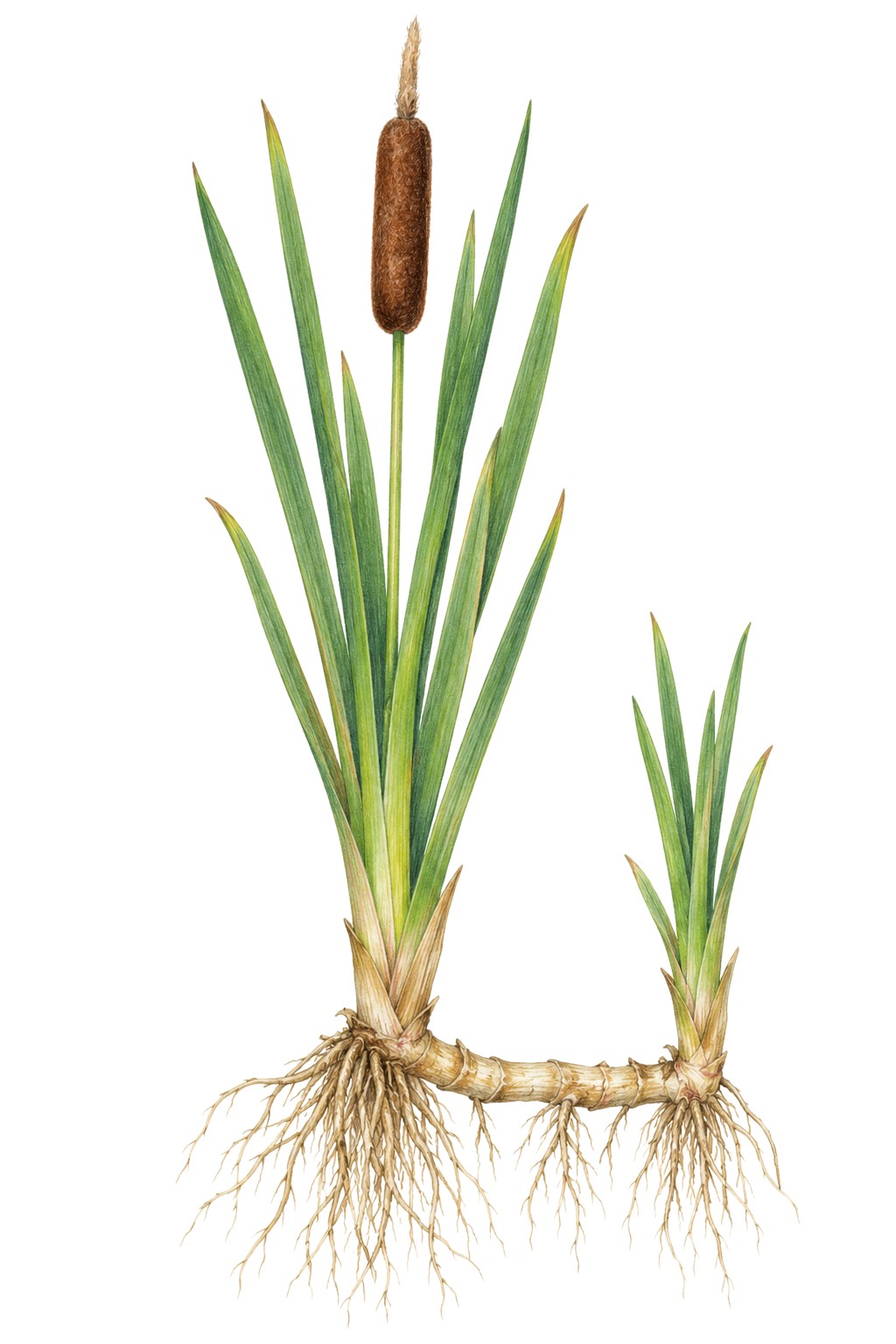
A question worth following
That question can lead to plant parts, life cycles, habitats, evidence and the people who have cared for these places for generations. This unit gives you a way to follow those connections without having to assemble the lessons yourself.
The hands-on work uses groceries, planted beans and a grow kit. Outdoors, the job is to observe. The field rule stays the same throughout: we do not pick, dig or taste wild plants or mushrooms.
Everything has a job
You lead from the Guide. Your child draws, measures and explains in the Field Journal. The cards come back throughout the study as familiar things to compare.
For the adult
All 16 sessions, tray lists, reading references, questions and answers. The steps are written out so another adult can lead a session too.
113 pages • Read on screen or print
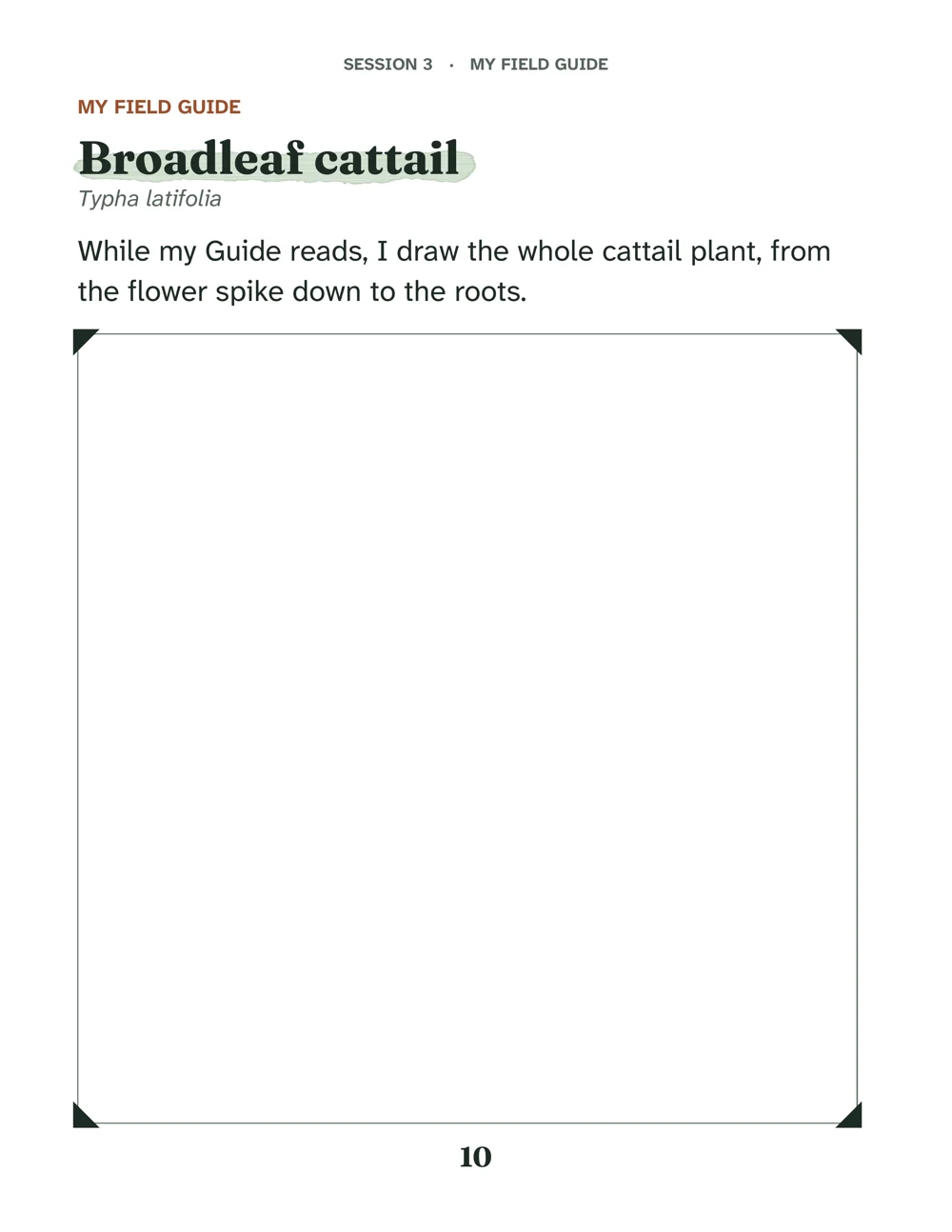
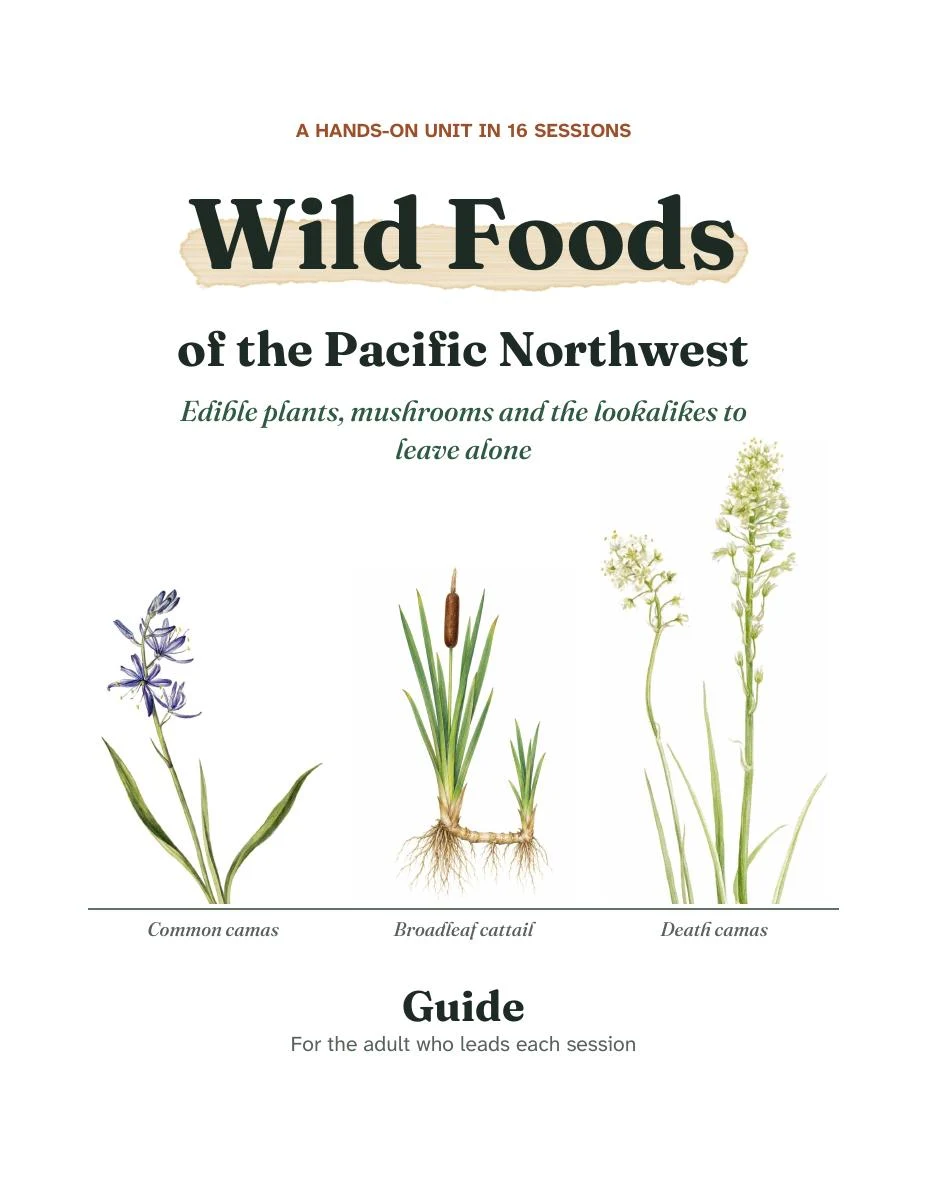
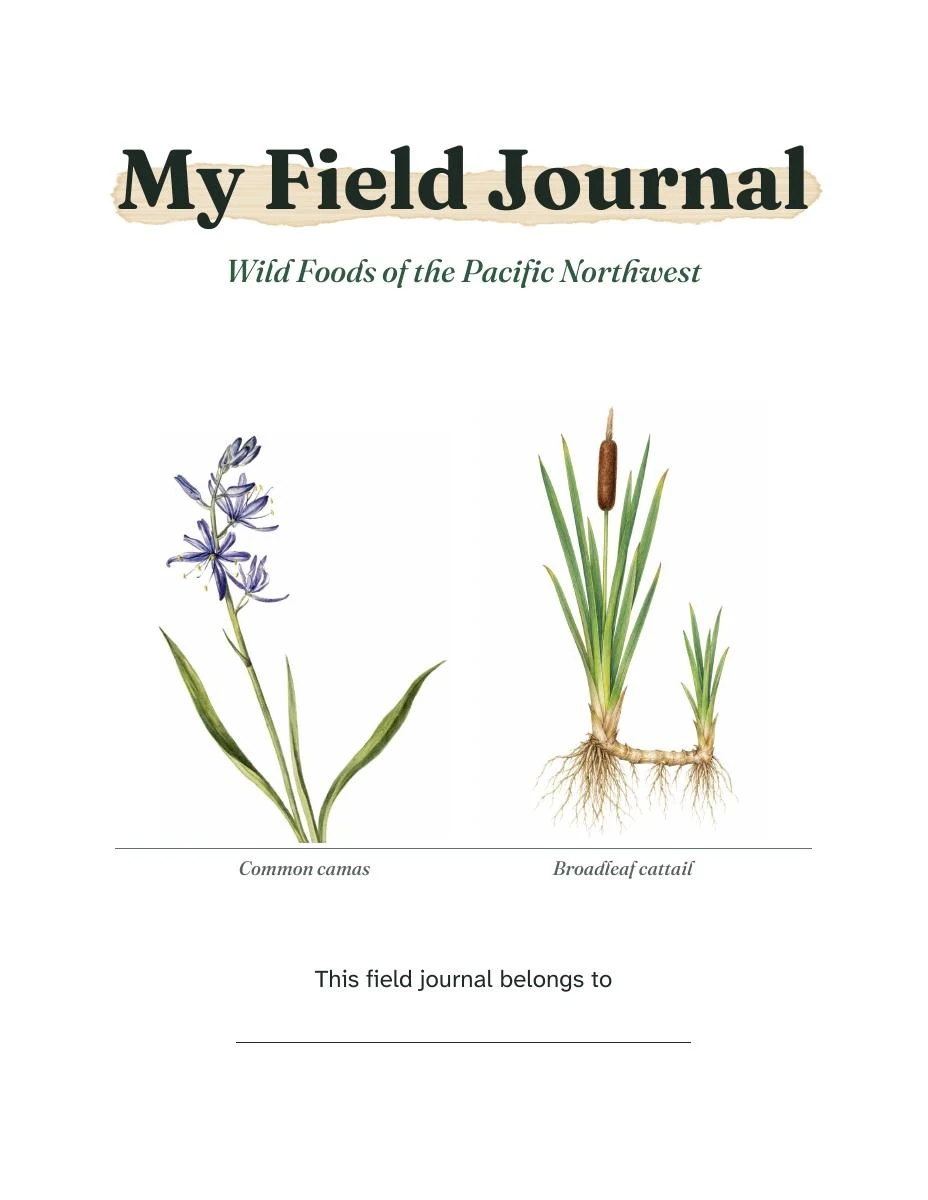
For the learner
A place for botanical drawings, experiment records, graphs, written explanations and five field guide entries that build over the unit.
55 PDF pages • 53 numbered journal pages
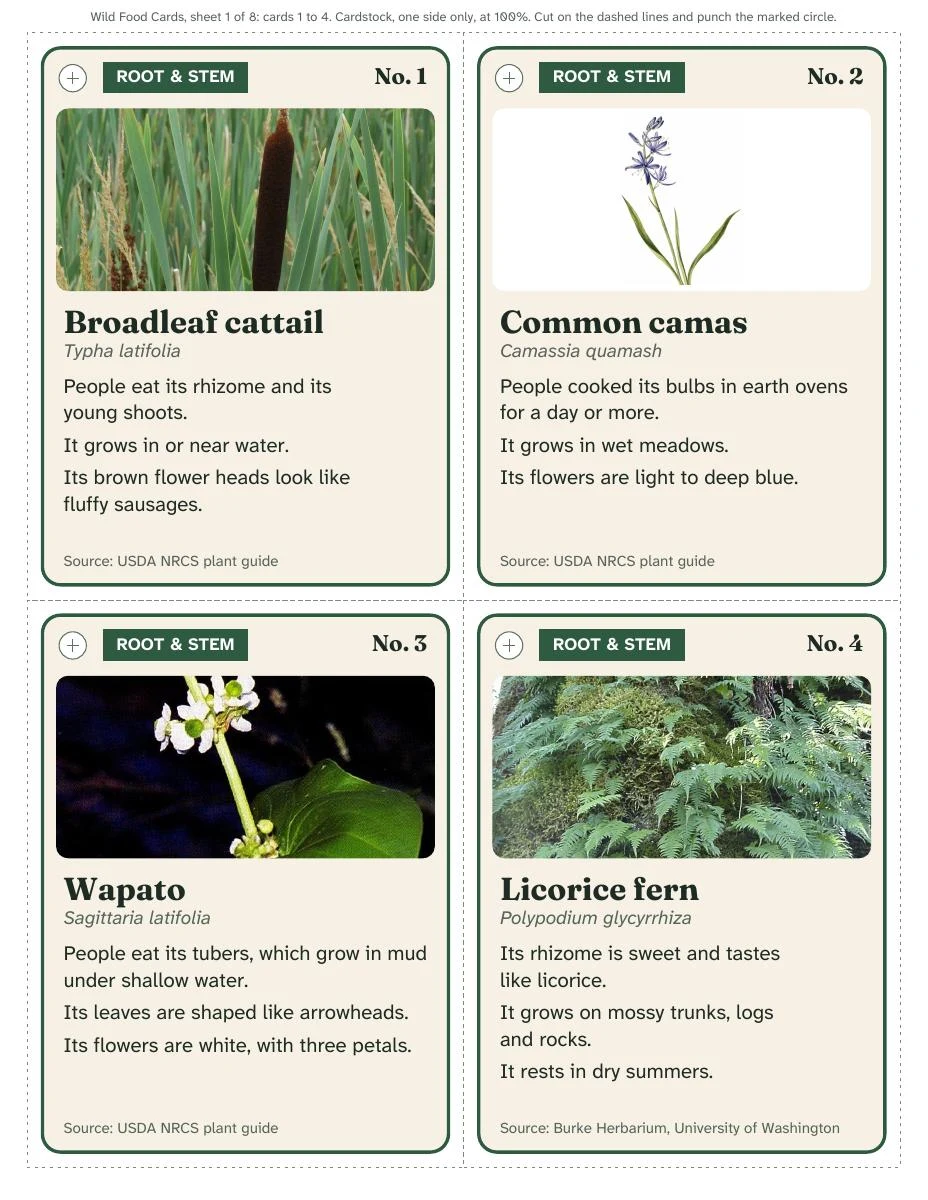
For the table
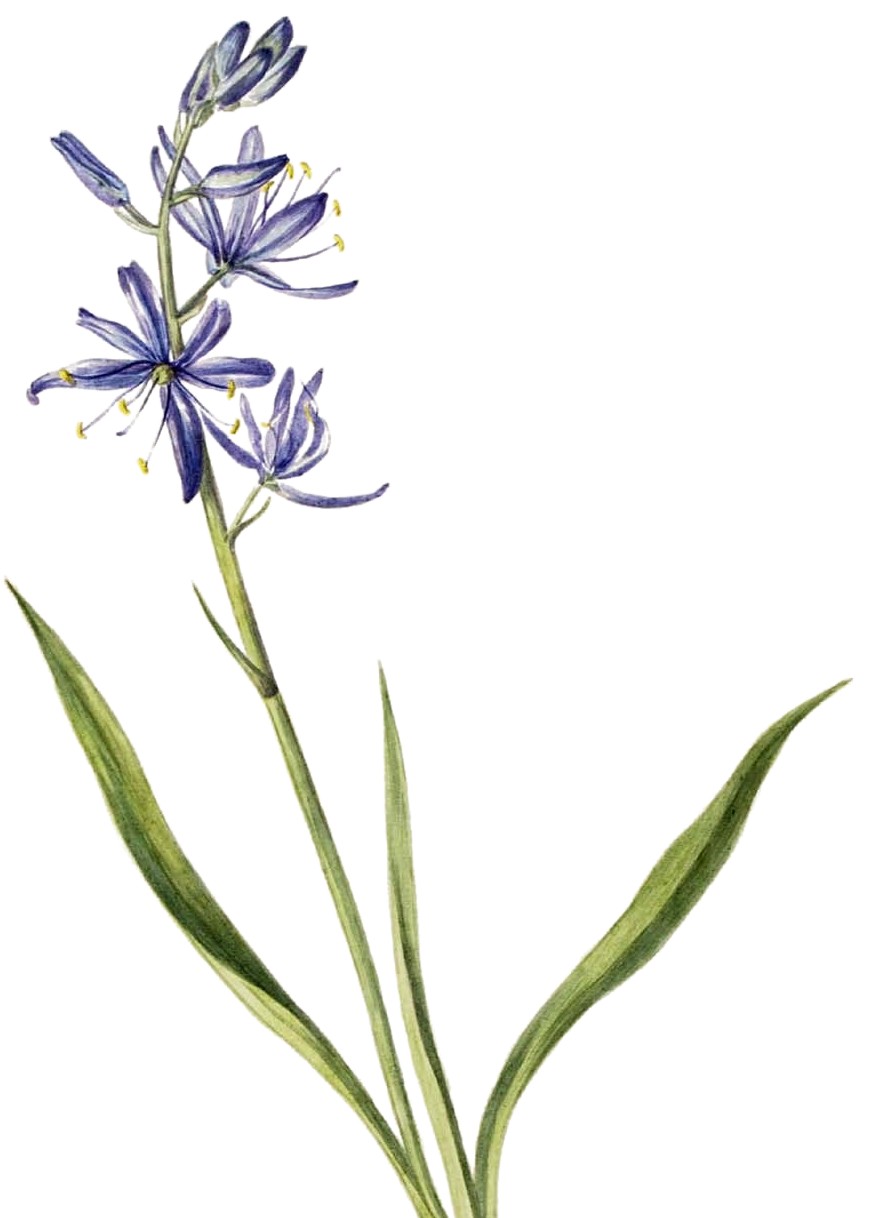
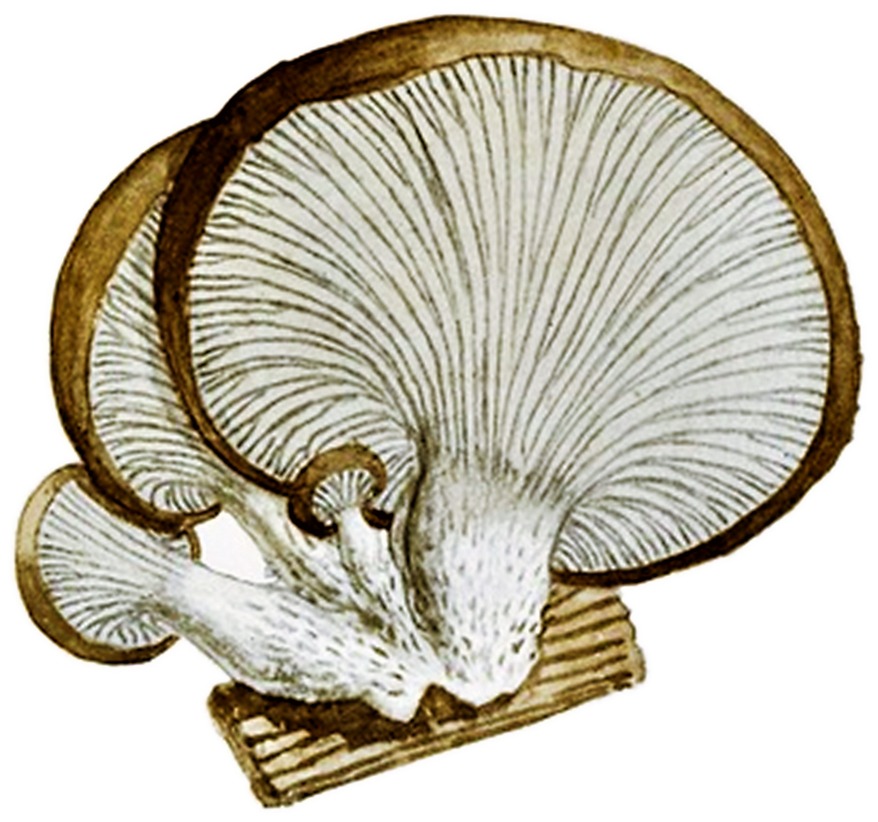
31 cards introduce wild foods and harmful plants and fungi. Learners sort them, compare details and return to them as their understanding grows.
31 cards on 8 sheets • Print one set
Get to know the neighbors
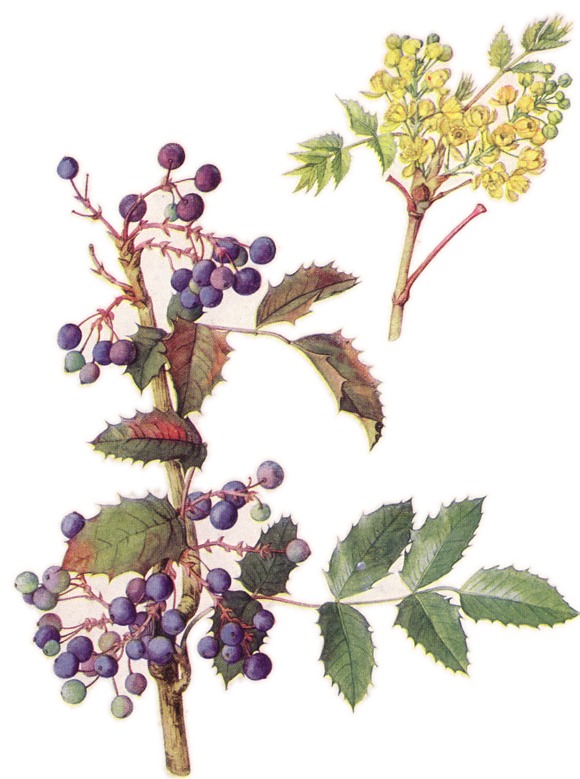
A rhythm you can recognize
Each session follows the same order: a short lesson, a reading while your child draws, and something to do with what they’ve noticed. On some days, you’ll also check the beans, the mushroom kit or the spore print.
Plan for two sessions a week on days that are not back to back. There is a little plant care in between, and the bean comparison happens 10 to 14 days after planting. The Guide tells you when to photograph and save the results for later.
You don’t have to make the experiment come out neatly. Learning to explain an unexpected result is part of the work.
The eight-week path
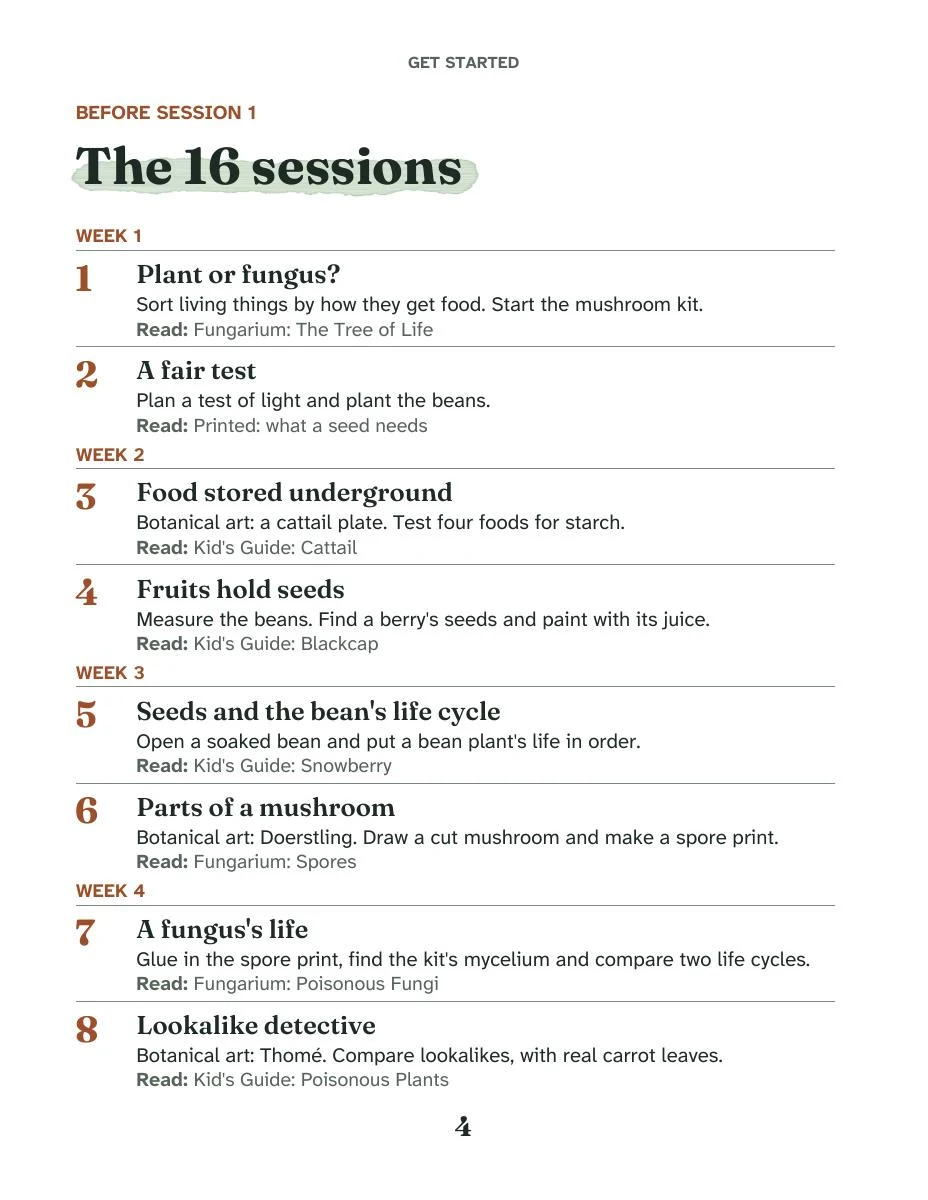
Sort living things, start an oyster mushroom kit and plant beans to investigate light.
Test familiar foods for starch, look for berry seeds and paint with blueberry juice.
Open a soaked bean, study its life cycle and make a portobello spore print.
Compare plant parts, explore a fungus's life and learn why a familiar shape is not enough.
Separate an observation from a claim, then compare a sunny plot with a shady one.
Graph the saved measurements and use the actual results to explain what light changed.
Graph Portland's rainy days and learn about Kalapuya care for camas fields through Grand Ronde sources.
Consider what huckleberries need, finish the journal's field guide entries and give someone a tour.
Before you buy
The PDFs give you the teaching plan and printable materials. The books and supplies below are separate. Checking the library first is a good place to start.
Open the actual book and supply page ↗Fungarium by Ester Gaya, illustrated by Katie Scott. First U.S. edition, 2021. ISBN 9781536217094.
A Kid’s Guide to Plants of the Pacific Northwest by Philippa Joly, 2023. ISBN 9781990776212.
An oyster mushroom grow kit, bush bean seeds, potting mix, eight small cups, a tray, a cardboard box, a spray bottle, a hand lens and a centimeter ruler.
Common groceries, drawing supplies, cardstock and basic household materials. One starch activity uses povidone-iodine with adult handling. The full list and groceries by session are on Guide pages 6 and 7.
Make room for a little science
Download & print at home
$29.99 USD
The Guide, Field Journal and all 31 cards, plus a quick printing guide. Print a journal for each learner in your household and share one set of cards.
Get the complete PDF unitDigital files only. Books, supplies and printing are additional.
A few practical questions
The science work is built around grade 3, with adult-led reading and discussion. A learner should be ready to draw observations, measure in centimeters, make simple graphs and explain an idea using evidence. You can scribe for a child who understands more than they are ready to write.
The plants, weather examples and cultural context are specific to the Pacific Northwest. Families elsewhere can still do the grocery activities, grow experiments and habitat comparisons, but local plants and seasons will differ.
No. This is a science and observation unit. Children do not pick, dig or taste wild plants or mushrooms. Food activities use identified groceries or a cultivated mushroom kit, with adult supervision and the kit’s own directions.
You can keep the 113-page Guide on a screen. Print the 55-page Field Journal double-sided for each learner, retaining the blank inside cover, and print the eight card sheets single-sided on cardstock. Use US Letter at 100% or Actual size so the measurement grid stays accurate.
No. It is an eight-week unit with selected grade 3 science connections. The Guide identifies what is addressed, what is only introduced and what is enrichment. It also includes evidence you can look for in the journal.
Yes. The PDF license covers one household. Share the Guide and cards and print a journal for each learner. The sessions are written around one learner, so adapt the conversation and help with writing as needed.
Payhip sends the PDF download link with your purchase. For a missing link or a question about the unit, email hana@madedeliberate.com.
Keep following the questions
Complete PDF unit • $29.99 USD